Identity Crisis

Blog_FlowerReflection

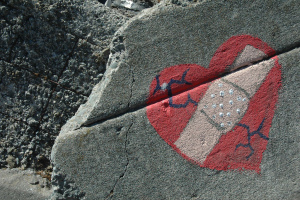
There is a truth that is greater than the lie. Our identity is not found in what we’ve done, for the good or for the bad. Our identity is not about who we’ve been but whose we are. Jesus Christ died on the cross that our identities can be transformed. In him, we are given a new identity. We’re no longer the addict, the prisoner, the failure. Instead, we’re chosen, redeemed, forgiven, loved…and free.


Source: A Case of Stolen Identity

Photo Credit: File:Flower reflection.jpg – Wikimedia Commons

A Case of Stolen Identity

Blog_ThiefI’m surprised how calm my husband and I were when we found out his identity may have been stolen. At an appointment, his driver’s license randomly scanned in association with a different birthdate. On paper, he was seventeen years younger. Not a bad thing in years, but not a good thing if someone got ahold of his personal information for malicious purposes. Who wants their good credit rating messed up by a complete stranger?


Near-catastrophes like this don’t stress me out like they used to. Probably because I realize just how temporary it all is. Light and momentary. Not worth the drain of life and energy that comes from chronic worry. Yet the prospect of what could have happened has got me thinking about another case of stolen identity.

The Bible says there is an enemy who lurks like a ravenous lion, seeking to devour our souls. This enemy comes “to steal and to kill and to destroy.” He’s the most cunning of all identity thieves, replacing the truth of who we were created to be with lies we come to perceive as reality.

Through these lies, we’re convinced we can never change. We believe our identity is inescapably tied to our past. Once an addict, always an addict. Once a prisoner, always a prisoner. Once a failure, always a failure. We can’t see past our faults to who we were meant to be.

But there is a truth that is greater than the lie. Our identity is not found in what we’ve done, for the good or for the bad. Our identity is not about who we’ve been but whose we are. Jesus Christ died on the cross that our identities can be transformed. In him, we are given a new identity. We’re no longer the addict, the prisoner, the failure. Instead, we’re chosen, redeemed, forgiven, loved…and free.

“So whoever is in Christ is a new creation: the old things have passed away; behold, new things have come.” (2 Cor 5:17)

Photo Credit: Thief the game | Flickr – Photo Sharing! www.flickr.com640 × 360Search by image

Whatever is…

Beyond_ThinkOnTheseThings


Source: Beware the Mind Invaders

The Sacrifice of Here and Now

Blog_Road

We often think of love as one big sacrifice,

but we can’t forget the countless moment-by-moment sacrifices involved in true love.

Source: The Sacrifice of Here and Now

Love and the Outcome

It made the top headlines. A teenage girl encouraged her friend to commit suicide. Records say she had over a thousand texts to intervene, and who knows how many more phone calls and conversations. He said he was scared and didn’t want to leave his family. Even got out of the truck before the carbon monoxide took over. But she urged him to get back in. And now she’s been called before a court of law—responsible, in part, for his death.

I wonder what the outcome would have been had she chosen to be part of the solution, rather than the problem—had she chosen to intervene, for the good. And though I can’t imagine influencing someone’s suicide attempt, I can’t help but ask how my silence in certain situations has contributed to a tragic outcome. Had I intervened—would the outcome have been different? Though I may never know, at least I’d have the peace of knowing I tried.

When it comes to something like suicide, I think we’d all agree on the importance of getting involved on behalf of a friend. But in other areas—those with less immediate consequences, we often stand quietly by, watching and wondering if things would be different if we’d just speak up. Our society is built on a faulty notion of a love that doesn’t intervene. We mistakenly believe that if someone is happy doing something—however self-destructive, the loving thing to do is to keep quiet. We fear being considered narrow-minded, even hateful, for saying something that could help.

Maybe there’s constant news of shootings and mass murders and other violence because no one was loving ENOUGH to say something when it needed to be said. If we had spoken truthfully, in love, when we saw a hint of a problem—or just had that gut feeling that something wasn’t right…maybe things would be different.

When I was a teen, I flushed a loved one’s liquor down the toilet because I saw its potential to destroy them. My actions wreaked havoc, initially. But in the end, it was a wake-up call that helped contribute to the ending of a potentially destructive addiction. It’s a decision I don’t regret, no matter how hard it was at the time. As mentioned in a past blog post, we may be misunderstood in the process. But that should never stop us from intervening for the good of those we love.

Source: Love and the Outcome

Decaffeinated

There are those who like coffee, and those who are obsessed. My friend was among the obsessed. For her, coffee was not just one of life’s perks, it was life. Her friends and I would fuel her caffeine addiction by making sure she had her daily doses before a meltdown ensued. Why? Because we loved her, of course.

Her habit persisted until a doctor ruled her beloved beverage a detriment to her health. She had a certain condition that didn’t mix well with coffee, so it was off-limits for the time being—much to her dismay. Saying goodbye to her daily cups-o’-joe would not be easy on her. Or her friends.

Each day, she came up with her list of reasons why she needed her coffee to survive, and we had to remind her what the doctor said. It would seem so loving just to give her what would make her happy. But with her diagnosis, the caring thing to do was to be honest about the potential negative side effects.

Now, coffee is not bad for everyone, and—to the joy of caffeine lovers everywhere, doctors have more recently noted some positive effects. But at the time, for the good of our friend, as much as we wanted to shower her with gift cards to her favorite coffee shop, the loving thing to do was to help her make changes that would benefit her health.

In our closest relationships, we may come to know someone well enough that we see habits that could potentially hurt them. And it’s likely they will see the same in us. We may be tempted to keep quiet, thinking the loving thing is to let them go on doing whatever makes them happy, even if it leads to the edge of a dangerous cliff. But true love is honest. If we really love someone, we’ll speak up—not in judgment, but in gentle concern for their well-being.

“Wounds from a friend can be trusted, but an enemy multiplies kisses.” (Proverbs 27:6)

Source: Decaffeinated

Tough Love

Oh, the look on my son’s face when I told him he couldn’t stick his head in the toilet. And when I thwarted his attempt to dive face-first into the empty bathtub. Or that time he figured out how to remove the protective shields from the electric sockets and I had to snatch his hand from certain danger. Those huge brown eyes, that look of shock. “Really, Mommy? Tell ME ‘no’? But I thought you LOVED me.”

That look of surprise typically melts into that smile he knows I can’t resist. He squints his eyes as if to say, “How can you tell this FACE ‘no’?” And he knows just how hard it is. When I steel my resolve against his charming tactics, that smile fades into the most pathetic, heart-rending pout. And when that doesn’t work…the WAIL that says, “If you loved me, you’d let me do whatever I want”.

Of course, big, compassionate sister comes to the rescue with that look. “How could you tell my impossibly cute baby brother ‘NO’?” And as they both stare me down with those eyes I have to explain I was saving him from drowning, cracking his skull, getting electrocuted, or whatever other potential disaster I just helped to evade. I may have even been saving his LIFE. No matter how I explain, they just don’t understand.

I’ve never liked being misunderstood. Especially when I’m saying or doing something because I love someone. The prevailing mindset is if we love someone, we watch them do whatever makes them happy even if we know it’s gonna hurt them. If it makes them happy to walk down the middle of a busy street and step in front of a semi, hey—just let them. If I say there’s a sidewalk to keep them safe from traffic, I’m considered narrow-minded and unloving. Just let me do what I want. The semi’s coming at me full-speed, but don’t intervene. It wouldn’t be loving.

If I love my kids, I’m most certainly going to intervene if something could hurt them (or if they’re about to hurt somebody else). In truth, it would be neglectful not to intervene. It’s the same in any relationship. If I see a friend or loved one nearing the edge of a deadly cliff, the loving thing is to say—and do, something…even if it’s misunderstood.

True love cares more about others’ well being above it’s own. It means being willing to step out of our comfort zones and even risk our reputation, if that’s what it takes to help someone. As for me, I sometimes have to be dubbed “the mean mommy” for a few hours because I cared enough to keep my kid from taste-testing the cat litter. Keeping the ones I love safe (and healthy!) is worth it. Even when I’m misunderstood.

Source: But I Thought You LOVED Me