 Love is more than gapers’ emotion. It’s not a fleeting concern or a passing feeling. It’s not drive-by sensitivity. Love doesn’t just pause. It stops. It feels deeply. And it acts.
50ShadesOfTrueLove
I Would Have Loved a Green, One-eyed Alien Child
 People say the most interesting things when it comes to the topic of adoption. Often humorous, sometimes rude, occasionally ignorant, but always interesting. Among the most interesting comments we’ve received is, “Of course you picked them. They’re so cute.” (Implying we chose our kids according to their most obviously endearing quality.)
Often, my response is a simple, polite smile. I usually don’t think of a good response until after the fact. As for the comment in question, I didn’t have an immediate reply except to say, “They ARE cute.”
And they ARE. Irresistably, impossibly, just-look-at-me-with-those-big-brown-eyes-and-I’ll-give-you-the-world…CUTE. But truth is, we had no idea what our kids would look like when we started the adoption process. They could have been green, one-eyed alien children for all we knew. We were ready, and willing, to love them—before we ever knew them. The fact that they happened to be so incredibly cute was an unexpected blessing.
Contrary to popular though immensely misguided belief, adoption is not about finally getting that much-desired bundle of joy. It’s not about filling empty, longing arms with a sweet, cuddly baby. And it’s not about picking a cute, lovable kid to add ascetic value to the next family photo.
Adoption is a permanent choice to invest our lives in a PERSON who will be part of our family…for life. That adorably innocent baby will one day grow to become a child, a teen, and, eventually, an adult. That’s why adoption is a long-haul commitment. It’s a binding decision to love at all costs, no matter what and for as long as we have breath. As with a biological child, relationship with an adopted child is a lifelong investment. They are loved, and they are family, no matter what they look like, who they are, what they do, or who they become. And their value is worth more than the greatest treasure we can imagine.
The Bible says God loved us before we were even born. His commitment to love runs so deep he sent his only son to die that we could be reconciled in relationship with him. And he willingly adopts us into his own family, should we chose to accept his invitation. This love is a binding love that doesn’t give up and doesn’t let go. No matter what.
“God decided in advance to adopt us into his own family by bringing us to himself through Jesus Christ. This is what he wanted to do, and it gave him great pleasure.” (Ephesians 1:5)
Not Quite Generous
 I was wondering why my baby boy was going through food so quickly while the puppy was getting so chubby. So when they thought I wasn’t watching, I spied on them and discovered the baby was feeding the puppy his extra food. It seems they had an unspoken food-sharing agreement going on behind my back. Whenever the baby had an abundance of food, he was more than happy to share with the puppy. But when I gave him only a couple bites at a time, he was a little more stingy with his offerings—much to the puppy’s dismay.
It’s easy to give when we have abundance. Our local newspaper runs an annual tally of the nation’s most generous people. Usually those featured are the wealthiest among us. It’s a noble thing, to give. But is giving truly generous when it comes only from abundance? If there’s no sacrifice, is it generosity at all?
I’ve heard it said that generosity is not measured by how much a person gives, but by what percentage, and what’s left over after the giving. It’s admirable that a millionaire gives a big chunk of their income to charity, but it’s not so hard to do when there’s mansions, vacation homes, luxury cars, and an infinite supply of gourmet food waiting when the giving’s done.
The more interesting newspaper article would be…who lives on the least so they could give the most? Of course, this article wouldn’t exist, because sacrificial giving is most often matched with genuine humility. When giving is self-serving—to draw attention to self and to inflate an image of nobility, it is not generosity but selfishness in disguise.
Lord, I pray you’d give me a truly generous heart—that I would give even when it’s hard and when it hurts. Let me give abundantly and sacrificially, with humility. I don’t want my giving to be self-serving, but to come from a heart of genuine love for others.
Source: Not Quite Generous
Sports, Love, and a Little Thing Called Jealousy
 I have to admit I sometimes get jealous of sports. It starts somewhere around the first pre-season kick-off—that tinge of dread in knowing it will be awhile before I have my husband’s full attention again. Our drive-time dialogue will be punctuated with emotion, yes. But shouts of “touchdown!” and laments of “interception” don’t always make for the conversation I crave. And just when I think it’s over come that Super Bowl holiday, I realize. It’s still a good few months until the NBA playoffs. And by then, baseball season is well underway.
Yes, my jealousy of sports may be ill founded. After all, my husband married me, not a football. Though each sport lasts but a season, I’ll be there for every season. And while there are times we go out for that much-anticipated romantic date and he’s staring at the sports screen behind me instead of looking into my eyes, I’ll be the one he goes home with at night. But the whole thing got me thinking—is there ever a time when it’s okay to be jealous?
The Bible speaks of an unhealthy jealousy—a kind that’s covetous, controlling, or possessive. Covetousness springs from discontent and ingratitude—wanting what others have for our own. Control stems from insecurity or egotism—wanting full reign over another’s life. Possessiveness derives from greed—wanting to own what was not ours to begin with. All three characteristics are rooted in selfishness. And love will never thrive in a selfish environment.
Love is not selfish, and therefore love is not ruled by unhealthy jealousy. That’s why the Bible says love is not jealous. It also says that God is love. Yet there are a few verses that mention he’s a jealous God. How can this be possible without being contradictory? When I read about God’s love for his people, it’s clear he’s not covetous, controlling, or possessive. But maybe there’s a different kind of jealousy—a kind that’s unselfish. A kind that’s protective.
In relationships, unhealthy, selfish jealousy can destroy. But healthy, selfless jealousy can serve to protect. My jealousy of sports is mostly quirky, though partly selfish in wanting my husband’s undivided attention. Yet it would be strange if I weren’t protective of our relationship when it came to something that could actually hurt or come between us.
It’s the same with God’s love. I believe it’s described as a jealous love because he wants to protect us from anything that can hurt us or thwart our greater purpose in life. Our loving creator desires our attention and affections, because in him we find that purpose. He’s protectively jealous when it comes to those habits and addictions in our lives that have the potential to destroy us, our calling, and our relationships.
Love is selfless. And love always protects. That’s why, sometimes, love is jealous—not in the unhealthy sense of the word, but in a life-giving, sheltering way that serves to reconcile and restore.
When No Means Yes
 Wisdom is learning that saying no might actually be the most loving thing we can do. It’s understanding that our no means yes to something greater, and realizing if we’re too busy to stop and love people, we’re too busy. The world will keep spinning if we say no to the lesser things. But it will miss out if we don’t say yes to the best God has for us.
“I cry out to God Most High, to God who fulfills his purpose for me.” (Psalm 57:2)
Source: When No Means Yes
Pure Love
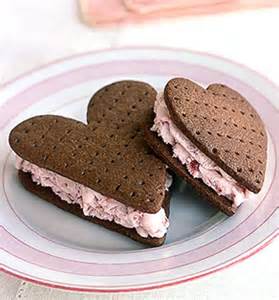 It started out as an endearing moment. After gifting me with an impromptu hug, my daughter lingered by my side, snuggling against my arm. I felt so loved.
“Awww, you must’ve really missed me this afternoon.” I stretched out my arms and returned the hug, reveling in her childlike affection. That’s when I noticed her glance shifting from my face to the fridge and back.
“Wellllllll, Mommy…” She looked at me with pity and expectation. “I’d really like something cold. You know, with chocolate on both sides and ice cream in the middle.”
“Oh, I get it.” I smiled wryly. “You don’t want me, you want an ice cream sandwich.”
She shrugged, face brightening with her shy, sweet smile. “Ummmm, yeeeahhh…”
I had to laugh. While my daughter has times when ulterior motives overtake her little shows of affection, I have no doubt that she truly loves me. Moments like these are humorous in light of her precious innocence.
But there are those in this world who don’t have such childlike innocence. Ulterior motives undergird their actions and poison their words. It’s not cute or funny when an adult uses love as a guise for selfish ambition. The smallest amount of poison can kill the most tender of hearts.
Have you heard of the woman from Samaria? She’d become so used to men approaching her with ulterior motives, it was expected as commonplace. And she was known for succumbing to their greedy desires. Until one day she met a man who asked nothing of her but water from the well. In return, he offered her water that would never leave her thirsty again—a water of true love from pure motives.
This woman, who’d spent years living to fulfill the insatiable appetites of others, was now filled with an understanding of what love was meant to be. This understanding transformed her life, healed her heart, and gave her renewed purpose. Because we were created to be filled with life transforming love—a love that is pure, and a love that purifies.
“Jesus answered, ‘Everyone who drinks this water will be thirsty again, but whoever drinks the water I give them will never thirst. Indeed, the water I give them will become in them a spring of water welling up to eternal life.’” (John 4:13-14)
Source: Pure Love
Beautiful Noise
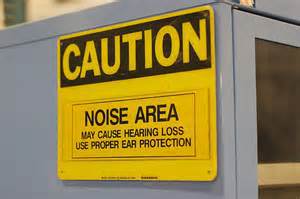 There are few sounds I love more than the sound…of silence. While some might get restless in a quiet house, I get inspired. It means there will be time to think and write, and maybe even rest. Solitude is one of my closest friends.
As much as I love quiet, I don’t get a lot of it. It’s tough to come by in a house with two high-energy kids, a persistent cat, and a dog who barks at everything that passes by our front door (even if it’s a leaf). Last year for my birthday, I asked for a half-day locked in the bedroom—alone with my computer and a mind full of uninterrupted ideas. But even the closed door and droning fan couldn’t drown out the noise beyond.
It wasn’t long before my solitude was invaded by something not-so-peaceful. The kids played on and squealed in ear-piercing decibels, blissfully unaware there was a momster of a storm brewing on the other side of the door. Before the storm could erupt to full-blown chaos, something stopped me. A still, small voice whispering. “Be quick to listen, slow to speak, and slow to anger.”
I reluctantly unplugged the fan that had drowned out a fraction of the noise, and listened. What I heard calmed the storm within. It was the sound of life and joy and fun and innocence. All too soon, those little noise-makers will be grown and my house will be quiet once again.
Be slow to anger. Listen. That gentle reminder helped me to hear the beautiful noise surrounding me. In the midst of that noise, there is peace. And I wouldn’t have found it had I been quick to anger.
Source: Beautiful Noise
 This Life & Beyond
You must be logged in to post a comment.