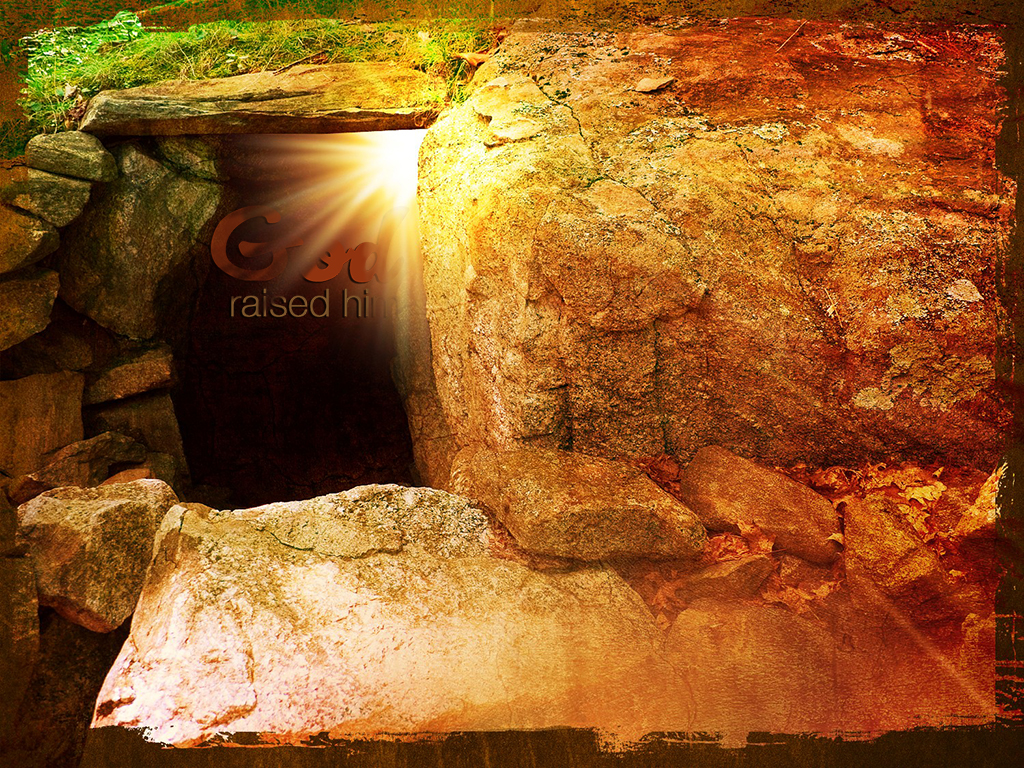
 When hope dies, it’s hard to believe life can prevail. We remain at the burial site—gazing upon what we’ve lost, unaware that something greater is destined to arise from the ashes. Helen Keller once said, “When one door of happiness closes, another opens; but often we look so long at the closed door that we do not see the one which has been opened for us.” When Jesus died on the cross, those who had followed him closely were unaware that His death was only the opening of a greater door in which God was about to do “exceedingly abundantly above all that [they could] ask or think” (Eph 3:20).
The women who witnessed the miraculous were met with the question, “Why do you look for the living among the dead?” (Luke 24:5). They earnestly came to Jesus’ disciples with news of the empty tomb, only to be met with disbelief. It was as if they had come to a tomb of another kind—where hope itself was permanently laid to rest. The disciples who’d walked with Jesus from the beginning of His ministry had mistakenly believed He’d come to set up an earthly kingdom. He had been their hope of liberation from oppressive governmental and religious systems—a political Messiah.
When He died on the cross, their dreams died with Him; when they buried Him in the tomb, they buried their aspirations as well. They did not understand Jesus’ destiny of suffering, predictions of death or promises of resurrection. They didn’t understand He had far greater things for them, an everlasting hope.
Many times we find ourselves in what appears to be a hopeless situation—a graveyard of disenchantment, surrounded by death. Life has disappointed us; we have disappointed ourselves. It seems that God has abandoned us to the grave. We cry out for hope, but Heaven is as brass. Alone in a graveyard of doubt and defeat, it seems that the promise of resurrection was nothing more than an illusion.
Yet it is when we have come to the end of ourselves that we are on the verge of finding true life. When things seem most hopeless, we are closer to a breakthrough than ever before. Why? Because we finally come to realize that the things we were hoping in were not worthy of our trust to begin with. They were incapable of sustaining us or providing the life we were looking for. We finally seal false hope in a tomb—never to be revisited. This is the beginning of resurrection.
When find ourselves at the entrance to life’s tombs, we have not come to a place of death: we have instead arrived at the door that leads to everlasting life and hope. Jesus’ death on the cross is an invitation to die to all our unworthy expectations. His resurrection is an invitation to find hope that will never die.
Photo Credit: Resurrection by Gerd Altman from Pixabay
(Originally posted April 2015)


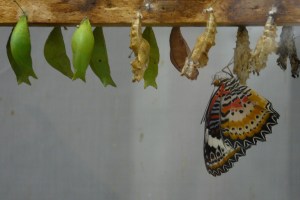 So it looks like my butterflies-to-be will be coming home with me for Spring Break. Though I was hoping my students would be here to witness metamorphosis, the timing just didn’t work out. But the coming transformation is something I definitely do NOT want to miss. How sad if it were to happen in an empty classroom, for no one to see.
 My butterflies are waiting in their chrysalises, soon to emerge in splendor and freedom. While I wait for their big reveal, I’m doing my best to follow the step-by-step directions that accompanied the butterfly garden kit. And, I might add, biting my nails. What if I do something wrong? Could one mistake prevent these amazing creatures from fulfilling their destiny? Will they die in their cocoon?
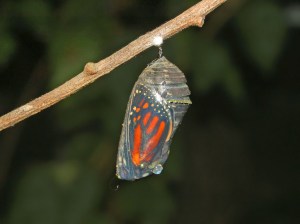 Last Monday I returned to my classroom after a long weekend to find a cup of dead bugs on my file cabinet. At least, I thought they were dead. In reality, those fuzzy insects lying dormant on the bottom of that cup were just waiting for something to happen.
 This Life & Beyond
You must be logged in to post a comment.