Friendship

More than a Neighbor

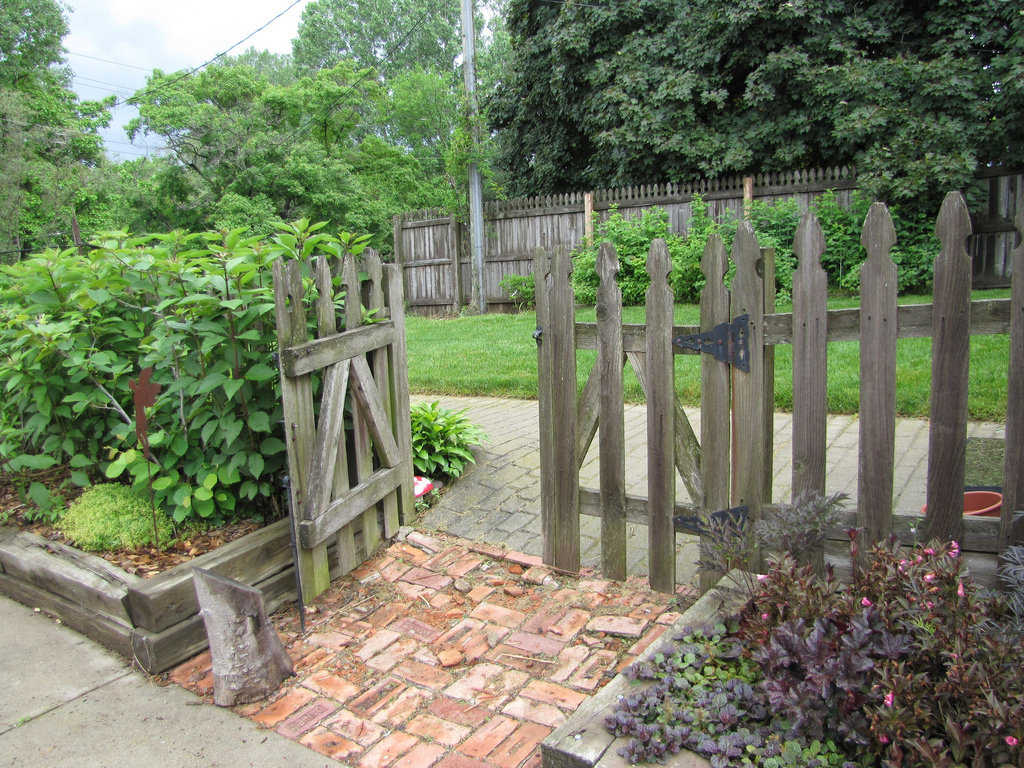
Blog_BackyardFenceQueue the game show music. You have ten seconds to name as many of your neighbors as you can. Ready, set…go!

How many names did you come up with? And how well do you know the people behind those names? I’ll have to admit, I didn’t do too well beyond my immediate neighbors. Sadly, in our quiet and transient neighborhood, we don’t see each other much beyond the parking lot. It was a surprisingly pleasant gift when our neighbors got locked out of their apartment and had to camp out in our living room for a couple hours.

What’s got me thinking about this? Last year as I was cleaning out my parents’ garage after their recent move their neighbor came by. He asked about my mom and dad, genuinely concerned about their well being and wondering if he could help in any way.

“You see,” he said, “your parents were more than neighbors to us. They always went out of their way for everyone in the neighborhood. They took the time to get to know us. They even helped us when we needed it—doing things like shoveling our walks. This place won’t be the same without them. And we want to help them like they helped us.”

What powerful words. My parents have always demonstrated the art of being a neighbor—my dad, the friendly, humble servant and my mom the gentle, nurturing caregiver. When I was little, they knew everyone within a few block radius, and even welcomed strangers into our home on a regular basis—from a lonely old man named Augie, to an autistic boy named Danny, to foreign exchange students from all over the world—one of whom said of my dad: “If everyone in the world were like him, there would be no war.”

How appropriate my dad’s nickname is Jasper—a precious stone known for representing sacrifice and royalty. It is listed as the first foundation stone in the walls of heaven. How fitting that my mom’s name means “grace.” She’s one of the most gracious people I know.

As I think about all I’m grateful for, one of the biggest things is that I have parents who are an example of what it means to “love your neighbor as yourself.” They’ve shown me what the Christian life should be: “do unto others as you would have them do unto you.” And they’ve emulated the words I saw each day on our kitchen wall as I grew up, “Love is the little things you do.”

“There is no greater love than to lay down one’s life for one’s friends.” (John 15:13)

Love and the Outcome

It made the top headlines. A teenage girl encouraged her friend to commit suicide. Records say she had over a thousand texts to intervene, and who knows how many more phone calls and conversations. He said he was scared and didn’t want to leave his family. Even got out of the truck before the carbon monoxide took over. But she urged him to get back in. And now she’s been called before a court of law—responsible, in part, for his death.

I wonder what the outcome would have been had she chosen to be part of the solution, rather than the problem—had she chosen to intervene, for the good. And though I can’t imagine influencing someone’s suicide attempt, I can’t help but ask how my silence in certain situations has contributed to a tragic outcome. Had I intervened—would the outcome have been different? Though I may never know, at least I’d have the peace of knowing I tried.

When it comes to something like suicide, I think we’d all agree on the importance of getting involved on behalf of a friend. But in other areas—those with less immediate consequences, we often stand quietly by, watching and wondering if things would be different if we’d just speak up. Our society is built on a faulty notion of a love that doesn’t intervene. We mistakenly believe that if someone is happy doing something—however self-destructive, the loving thing to do is to keep quiet. We fear being considered narrow-minded, even hateful, for saying something that could help.

Maybe there’s constant news of shootings and mass murders and other violence because no one was loving ENOUGH to say something when it needed to be said. If we had spoken truthfully, in love, when we saw a hint of a problem—or just had that gut feeling that something wasn’t right…maybe things would be different.

When I was a teen, I flushed a loved one’s liquor down the toilet because I saw its potential to destroy them. My actions wreaked havoc, initially. But in the end, it was a wake-up call that helped contribute to the ending of a potentially destructive addiction. It’s a decision I don’t regret, no matter how hard it was at the time. As mentioned in a past blog post, we may be misunderstood in the process. But that should never stop us from intervening for the good of those we love.

Source: Love and the Outcome

Decaffeinated

There are those who like coffee, and those who are obsessed. My friend was among the obsessed. For her, coffee was not just one of life’s perks, it was life. Her friends and I would fuel her caffeine addiction by making sure she had her daily doses before a meltdown ensued. Why? Because we loved her, of course.

Her habit persisted until a doctor ruled her beloved beverage a detriment to her health. She had a certain condition that didn’t mix well with coffee, so it was off-limits for the time being—much to her dismay. Saying goodbye to her daily cups-o’-joe would not be easy on her. Or her friends.

Each day, she came up with her list of reasons why she needed her coffee to survive, and we had to remind her what the doctor said. It would seem so loving just to give her what would make her happy. But with her diagnosis, the caring thing to do was to be honest about the potential negative side effects.

Now, coffee is not bad for everyone, and—to the joy of caffeine lovers everywhere, doctors have more recently noted some positive effects. But at the time, for the good of our friend, as much as we wanted to shower her with gift cards to her favorite coffee shop, the loving thing to do was to help her make changes that would benefit her health.

In our closest relationships, we may come to know someone well enough that we see habits that could potentially hurt them. And it’s likely they will see the same in us. We may be tempted to keep quiet, thinking the loving thing is to let them go on doing whatever makes them happy, even if it leads to the edge of a dangerous cliff. But true love is honest. If we really love someone, we’ll speak up—not in judgment, but in gentle concern for their well-being.

“Wounds from a friend can be trusted, but an enemy multiplies kisses.” (Proverbs 27:6)

Source: Decaffeinated

When We Can’t Love

God loves us even when we can’t love him. He loves even when we’re powerless to love our enemies, and even when we struggle to love our friends. And by his love, he enables us to love with sincere, supernatural, unfailing, and unconditional…love.

Source: Love for the Rhythm-impaired

Weather Wimps, Beware

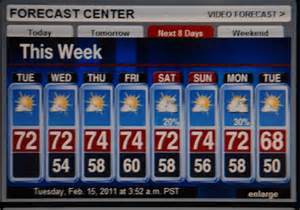
If you live somewhere close to the equator, you may think you have it made. You don’t have to worry about blizzards, shoveling, snow days, or sub-zero temperatures. The weather reports are so boring where you live, it’s a wonder the meteorologist doesn’t fall asleep on the job. Eighty degrees and sunny all week, every week is not all that interesting. You may even have become a bit snobby about your warm weather location, boasting without reservation on social media while the rest of us suffer chronic hypothermia and mid-winter depression.

Maybe I’ve become bitter about the weather situation where I live. Literally. Because I’ve not-so-affectionately coined a phrase for all the warm-climate snobs out there. Weather Wimps.

Yes, Weather Wimps. You may never have to scrape ten-inch thick ice sheets from your car windows while icicles form in your nostrils and your long johns freeze to your thighs, but you don’t know what it is to endure the harsh reality of inclement winter weather. We in the Midwest are durable. We know how to survive the breath-choking heat of summer and the bone-chilling cold of winter, all in the same year—sometimes in the same month. We know how to layer up, and we know how to cool down. And our city infrastructure doesn’t shut down over a light dusting of snow.

You Weather Wimps will never know the rewards of our great suffering. Out here, we appreciate spring. We don’t take the sun for granted. The first green tree buds of the year are enough to make us pause and breathe thanks. A fragrant flower is not to be ignored. After a few months of frostbite-inducing cold, we wear a spring breeze like a royal garment. The heat of summer soon scorches relentlessly, but we get to witness an explosion of fall colors and treasure the crisp autumn air in the months to follow.

Midwestern weather patterns more realistically resemble human relationships. In every relationship, there’s the newness of spring, the scorching heat of summer, the beautiful yet mournful death of fall, and the frigid winds of winter. Weather Wimps, beware. If you approach relationships the way you approach your weather reports, you may be setting yourself up for disappointment. No relationship is as perfect as a Southern California day. Relationships are rough-hewn and rugged. More like…a typical Chicago forecast.

True love is unfailing. It doesn’t cave when storms rush in. It doesn’t hibernate when emotions run cold. It’s as steadfast as a Midwesterner trapped in a polar vortex. Weather Wimps, take heed. You may be gloating over there, in your heated outdoor pool while we shovel our walks for the thousandth time. But you have something to learn from us Midwesterners. And it’s not just about the weather.

Source: Weather Wimps, Beware

The Day I Celebrated my 107th Birthday

I’m not even a half-century old, as some have come to believe—though I did celebrate my 107th birthday last year. My birthday does not fall on Leap Year. And while my memory is not completely in tact, I do recall the day I nearly doubled in age.

Remembering birthdays has never been my strong point, and it has nothing to do with old age. I don’t expect anyone but my immediate family to remember mine. Sometimes, I even forget my own birthday. So I entered it on Facebook as February 29, 1908 as a joke. That way I’d only have to celebrate once every four years, which is fine by me.

I’d forgotten all about it until I opened my account on February 28, 2015 to a timeline filled with birthday wishes—though those who really know me caught the humor behind it. After a good laugh, I thanked my well-wishers, apologized for the misunderstanding, and changed my birthday info in the account settings.

The whole thing got me thinking—how well do I really know my friends? There’s no way I could know every detail about everyone’s life, and I wouldn’t expect a small fraction of my friends to know the same about me. But those closest to me, know me—and I, them.

There are friends from different seasons of my life, all whom I love for the roles they’ve had in my life story. Some of those friends I know well, others I wish I’d had the chance to get to know better. Then there are those with whom I’ve shared the deepest valleys and the highest heights. We know each other well enough to “see into” each other. We don’t need social media to remind us the details of our lives, because we already know.

Beyond even the best of friendships, there is one who knows us better than we know ourselves. God not only knows the day we were born, he knew us before we were born. It says he knows our deepest thoughts and our unspoken desires. He sees the hidden corners of our hearts, yet loves us still. So, even if the world mistakenly believes me to be 107 years old, God counts the exact number of my days. Because true love knows.
 
“You have searched me, Lord, and you know me. You know when I sit and when I rise; you perceive my thoughts from afar. You discern my going out and my lying down; you are familiar with all my ways. Before a word is on my tongue you, Lord, know it completely. You hem me in behind and before, and you lay your hand upon me. Such knowledge is too wonderful for me, too lofty for me to attain.” (Psalm 139:1-6)

Source: The Day I Celebrated my 107th Birthday

I See Royalty

When our vision changes, so do our actions. How would we act in the presence of a king or a queen? When we begin to see the average person as royalty, we’ll treat them the same.

Source: I See Royalty