Faith

Temporary

Blog_CloudsAndSun

“So we fix our eyes not on what is seen, but on what is unseen, since what is seen is temporary, but what is unseen is eternal.” (2 Corinthians 4:18)


Source: Gone in An Instant

Photo Credit: Clouds Over Vietnam | www.flickr.com1024 × 622Search by image

It’s Not in Vain

Blog_FootprintsBeachI love a man named Asaph. Yes, he lived about 3,000 years ago and no, I’ve never met him. He’s one of the lesser-known writers of the psalms. Lesser, I say, because we all know about King David and tend to mistakenly attribute all the psalms to him. But Asaph had a lot to say. And when it comes to those gut-wrenchingly honest psalms, Asaph’s are just about as raw as they get.

Psalm 73 is one of my favorites. Here, Asaph divulges his struggles, zeroing in on a time when his “foot almost slipped.” He’d fallen into the common trap of envy, though in this case he envied the wicked—not because they were wicked, but because they seemed to prosper in all they did.

Why were those whose hearts were bent on evil so graced with problem-free lives? They did whatever they wanted, hurting whoever they wanted along the way, and yet they lived on, “free from common human burdens.”

Oh, how I relate to Asaph. Sometimes, I echo his lament, “Surely in vain I have kept my heart pure and have washed my hands in innocence. All day long I have been afflicted, and every morning brings new punishments.”

I echo this, but I know in my heart that Asaph moved beyond that lament as must I. His thinking was mired in despair until he “entered the sanctuary of God.” It was there, he understood.

There is an end to evil. Though it seems to rise triumphant, it will not prevail, nor those who revel in it.

An eternal perspective transforms our narrow, earth-bound perspective. It elevates our thinking, to remember, “my flesh and my heart may fail, but God is the strength of my heart and my portion forever.”

The things of the earth are fading, falling—a mere chasing after the wind. But it is NEVER in vain to pursue the things of heaven while here on earth. Because there will come a day when we will finally see eternity. And it’s gonna be worth it.

“Life will always seem unfair when we measure it by earthly standards of health, wealth and power. But when we encounter God in a personal, intimate way…we can gain a heavenly perspective. We’ll begin to see the other part of the picture—that the rewards of this life are temporary and, as a matter of fact, can even hinder us from discovering what is truly important.” (Philip Yancey & Tim Stafford)


Photo Credit: Free stock photo of sea, beach, footprint www.pexels.com

Half-mast

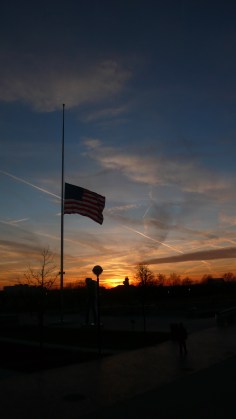
Blog_HalfMastIt seems the flags have been flying half-mast more often than not these days. Sometimes we drive by, and we know. “Oh, it’s for that tragedy in such-and-such a city,” or, “It’s for the terror attack in that other town.” Other times, we don’t. “What now?” we ask.

I heard on the radio that our president has called for flags to be at half-mast on sixty-seven occasions since he took office. And how many more times will that call go forth as we tread through the coming years in our sin-plagued land?

Half-mast “refers to a flag flying beneath its summit on a pole” as a symbol of “respect, mourning, or distress.” Do we realize the degree of distress our country is in when we so consistently see flags flying half-mast? Or do we walk on, somber for a moment, soon forgetting the distress call? Has it become so commonplace that we fail to remember the symbolism?

As the flags fly beneath their summit, maybe our hearts need to be half-mast as well. Respecting, mourning, remembering. Understanding of the times.

What tragedy will it take to bring us to our knees? When will we humble ourselves and turn from our selfish ways? When will we turn to the one who created us for so much more than what we’ve settled for? When will we admit that we need help? When will we pray?

And when will we stop going on, life as usual, when we all know…it’s NOT?

Every time we see flags at half-mast, it serves as a wake-up call. We are not invincible. We are not all-sufficient. We need a savior.

“If my people, who are called by my name, will humble themselves and pray and seek my face and turn from their wicked ways, then I will hear from heaven, and I will forgive their sin and will heal their land.” (2 Chronicles 7:14)


Photo Credit: Half-mast – Wikipedia, the free encyclopedia

Restoration

Blog_BreakingThrough

“Though you have made me me see troubles, many and bitter, you will restore my life again; from the depths of the earth you will again bring me up. You will increase my honor and comfort me once again.” (Psalm 71:20-21)


Source: Hope in the Midst of Suffering

Photo Credit: Brown Grass Under the Sun · Free Stock Photo www.pexels.com

Hope in the Midst of Suffering

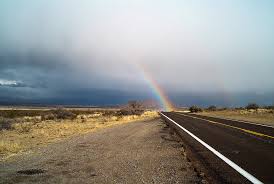
Blog_DesertRainbow“But those who suffer he delivers in their suffering; he speaks to them in their affliction. He is wooing you from the jaws of distress to a spacious place free from restriction, to the comfort of a table laden with choice food.” (Job 36:15-16)

So often our first response to suffering is to cry from the depths of our hearts, “GET ME OUT OF THIS!” The temptation is to exert all our efforts in pursuing escape. We come out of the fight wearier than we started, our suffering compounded by our disappointment.

Notice the verse above says God delivers us in our suffering, not necessarily from it. When faced with the threat of death by fiery furnace, Shadrach, Meshach, and Abednego responded with genuine faith in saying, “the God we serve is able to save us,” while also acknowledging that if he chose not to, they would still worship him. The outcome of their faith was a walk with God in the midst of the fire. They had to go into the fire before they could meet with God in the midst. And they came out unharmed.

John the Baptist faced a similar crisis of faith. In his prison cell, faced with beheading, he questioned whether Jesus was truly the Messiah come to save. If he’s truly the Savior, why doesn’t he save me from the hands of this madman who’s about to kill me? Jesus’ response? “Blessed is the man who does not stumble on account of me.” In other words, we’re blessed when God fails to live up to our expectations yet we continue in faith, knowing his purposes are greater than our own.

God is who he chooses to be, not who we make him to be. He does what he wills, not always what we want. When we embrace this truth, he speaks to us in our affliction, and we’re freed from the restrictions of our expectations. His “wooing us from the jaws of distress” is a picture of what takes place internally—the freedom of joy independent of our circumstances. Whether or not he physically delivers us, we feast on his word—walking closely with him in the midst of the fire…knowing him more intimately as a result, and walking with a more genuine faith when the fire finally dies.

Photo Credit: Desert Rainbow | Flickr – Photo Sharing!

Never the Same

Blog_PlantInDryCrackedMud

Only God’s supernatural power can enable us to change. Only His love can so radically transform us that our lives are never the same. And only then, out of gratitude, can we live the lives we were destined to live.


Source: Do Not Read this Blog Post

Photo Credit: Plant in dried cracked mud | Flickr – Photo Sharing!

Do Not Read this Blog Post

Blog_Warning_LawThe sign said, “do not throw stones.” Nothing ambiguous about it. But at different times throughout the day, as we walked along the beach, the common scene was that of people throwing rocks…at the sign.

What is it about the law that makes us want to do the opposite? What is it about rules that arouse disobedience? And what weakness within motivates rebellion? The law cannot change a man any more than the mirror that exposes a dirty face can make it clean.

When they were teens, my husband and his brother decided to play a joke on their friend. While he was sleeping, they decorated his face with marker then woke him when they arrived at the local burger joint. What do you think the guy did when he saw his face in the bathroom mirror? Screamed, yes. But did he then take the mirror off the wall to wash his face? No. The mirror pointed him to the only thing that could make him clean…water.

Lasting change can only come through our recognition of the powerlessness of the law to change us. The law, like the curb on a street, can keep us safe. And like a target, it shows us where to place our aim. But like a mirror, it shows us how far we fall short…and how much we need divine intervention if we’re ever to change. Only God’s supernatural power can enable us to change. Only His love can so radically transform us that our lives are never the same. And only then, out of gratitude, can we live the lives we were destined to live.

“For the law of the Spirit of life has set you free in Christ Jesus from the law of sin and death. For God has done what the law, weakened by the flesh, could not do…” (Romans 8:2-3)