Marriage

Returning from War

blog_lonelysoldieri’ve waited long for your return
and yet things aren’t
as they once were
i search your eyes, only to find
you’re now a stranger
in my life…

who are you?
i don’t even recognize you…

shadows of an endless war
devour the joy
that once was yours
and veils of darkness
now consume
the light that once surrounded you

you are lost to me

what visions of battle terrorize
what relentless nightmares
haunt your life?
what ghosts of battle
forged their scars
ravaging what once was ours?

please…answer me

i walk into
your life’s abyss
and question how it came to this
for though i search
i cannot find
a whisper of what once was mine…
a fire has burned away the years
trading happiness
for tears

i must let go

i surrender
to the hands of time
relinquishing what once was mine
resolved to love you as you are—
heavy-laden,
battle-scarred…
fighting through the tears and wars
to help you find
what once was yours


poetry by j.e. fernandez

Photo Credit: lonelysoldier – DeviantArt

The Sacrifice of Here and Now

Blog_Road

We often think of love as one big sacrifice,

but we can’t forget the countless moment-by-moment sacrifices involved in true love.

Source: The Sacrifice of Here and Now

Legacy

Beyond_Legacy

The world has enough “successful” people, but too few who know how to love.  Imagine the difference we’d make if we chose to fully love all of those within our sphere of influence.  Such love would be a greater contribution to our world than any of the greatest missions in history. #thegiftoflove

Learning to Listen

Blog_Soundwaves

The other day, one of my four-year old students decided to step in and help mediate a conflict in which one kid accused another of name-calling. “That’s not what happened!” she said. “They just misunderheard each other.” Her vocabulary may not have been accurate, but I realize how right she is.

How many misunderstandings are really a result of “misunderhearing”? We half-listen, not hearing what the other person is trying to say because we’re already formulating what we want to say in response. Or we misinterpret what was said altogether, sifting their words through our own preconceived notions.

My old landlord always used to say, “the root of all conflict is uncommunicated and unmet expectations.” How much relational conflict would be avoided if we took to heart the Bible verse exhorting us to be “quick to listen, slow to speak, and slow to become angry?” If we just slowed down enough to hear and to respond appropriately, what needless pain would we avoid?

This applies within our human relationships, and also in our relationship with God. How many times do we misunderhear his word? We take a verse out of context, twist it as we desire then wonder why it’s not working like some magic spell over our lives. Bitterness sets in as we mistakenly believe God didn’t make good on his promise, when all along we weren’t rightly hearing what he had to say.

And how extreme has our world’s caricaturized vision of God become as it listens to lies and half-truths perpetuated by media propaganda and hypocritical churchgoers, never bothering to search his word for the truth of who he is. If only we would listen. If only we would hear. How much more would we know God for who he truly is, and not what our idolatrous hands have made him to be?

“All this is from God, who through Christ reconciled us to himself and gave us the ministry of reconciliation; that is, in Christ God was reconciling the world to himself, not counting their trespasses against them, and entrusting to us the message of reconciliation. Therefore, we are ambassadors for Christ, God making his appeal through us. We implore you on behalf of Christ, be reconciled to God.” (2 Corinthians 5:18-10)

God, slow us down. Help us to listen to your still small voice, to hear what you are saying above the clamor of this world. Show yourself for who you truly are, not for what we’ve tried to make you to be. And as we rightly hear you, bring healing to our relationships with you and with others, as only you can. In Jesus’ name.

Photo Credit: Sound Waves Free Stock Photo – Public Domain Pictures

The Time-stopping Alarm Clock that Doesn’t Exist

Behold, my greatest invention: a snooze button that actually stops time. Just press the button at, say, 6am, sleep in for another few hours, and still wake up at 6am that same day. You’ll never be late for work, school, or appointments. And you’ll never be tired again.

Okay, so the miracle snooze hasn’t been invented…yet. But if you find it does exist, please remember me on your gift list. Because there are days when I don’t feel like getting up.

Add to that list of things I don’t always feel like doing…changing another diaper, washing another dish, folding another load of laundry, ironing (ugh), picking up another room full of toys, and…you get the point. Daily life often thrives or fails based on our choice to do what we don’t feel like doing. Getting up each morning is not on option. The same applies to the multitude of other monotonous but necessary daily tasks. Even the most coveted of jobs involves a certain degree of unappealing, mundane routine.

It’s the same in love. In every relationship, there comes a point where we must choose to love. I’ve been married almost twenty years, and I know. There are days when it’s truly, madly, deeply, and days when we’ve lost that loving feeling. First-date feelings fade. Honeymoon euphoria evaporates. The daily grind drones and drains. But no relationship lasts without the determination to love at all times.

Relationships, like buildings, need a firm foundation to stand. While emotions are an integral part of life, they make for a flimsy foundation. Feelings evolve more frequently than a quick-change artist. Relationships that rely solely on sentiment are doomed to fail. True love goes beyond feelings. It’s a commitment to love someone whatever the cost, even when emotion runs dry. And the reward of endurance is deeply rich, satisfying, and lasting relationships.

Source: The Time-stopping Alarm Clock that Doesn’t Exist

Sports, Love, and a Little Thing Called Jealousy

I have to admit I sometimes get jealous of sports. It starts somewhere around the first pre-season kick-off—that tinge of dread in knowing it will be awhile before I have my husband’s full attention again. Our drive-time dialogue will be punctuated with emotion, yes. But shouts of “touchdown!” and laments of “interception” don’t always make for the conversation I crave. And just when I think it’s over come that Super Bowl holiday, I realize. It’s still a good few months until the NBA playoffs. And by then, baseball season is well underway.

Yes, my jealousy of sports may be ill founded. After all, my husband married me, not a football. Though each sport lasts but a season, I’ll be there for every season. And while there are times we go out for that much-anticipated romantic date and he’s staring at the sports screen behind me instead of looking into my eyes, I’ll be the one he goes home with at night. But the whole thing got me thinking—is there ever a time when it’s okay to be jealous?

The Bible speaks of an unhealthy jealousy—a kind that’s covetous, controlling, or possessive. Covetousness springs from discontent and ingratitude—wanting what others have for our own. Control stems from insecurity or egotism—wanting full reign over another’s life. Possessiveness derives from greed—wanting to own what was not ours to begin with. All three characteristics are rooted in selfishness. And love will never thrive in a selfish environment.

Love is not selfish, and therefore love is not ruled by unhealthy jealousy. That’s why the Bible says love is not jealous. It also says that God is love. Yet there are a few verses that mention he’s a jealous God. How can this be possible without being contradictory? When I read about God’s love for his people, it’s clear he’s not covetous, controlling, or possessive. But maybe there’s a different kind of jealousy—a kind that’s unselfish. A kind that’s protective.

In relationships, unhealthy, selfish jealousy can destroy. But healthy, selfless jealousy can serve to protect. My jealousy of sports is mostly quirky, though partly selfish in wanting my husband’s undivided attention. Yet it would be strange if I weren’t protective of our relationship when it came to something that could actually hurt or come between us.

It’s the same with God’s love. I believe it’s described as a jealous love because he wants to protect us from anything that can hurt us or thwart our greater purpose in life. Our loving creator desires our attention and affections, because in him we find that purpose. He’s protectively jealous when it comes to those habits and addictions in our lives that have the potential to destroy us, our calling, and our relationships.

Love is selfless. And love always protects. That’s why, sometimes, love is jealous—not in the unhealthy sense of the word, but in a life-giving, sheltering way that serves to reconcile and restore.

Source: Sports, Love, and a Little Thing Called Jealousy

Weather Wimps, Beware

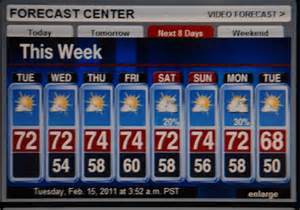
If you live somewhere close to the equator, you may think you have it made. You don’t have to worry about blizzards, shoveling, snow days, or sub-zero temperatures. The weather reports are so boring where you live, it’s a wonder the meteorologist doesn’t fall asleep on the job. Eighty degrees and sunny all week, every week is not all that interesting. You may even have become a bit snobby about your warm weather location, boasting without reservation on social media while the rest of us suffer chronic hypothermia and mid-winter depression.

Maybe I’ve become bitter about the weather situation where I live. Literally. Because I’ve not-so-affectionately coined a phrase for all the warm-climate snobs out there. Weather Wimps.

Yes, Weather Wimps. You may never have to scrape ten-inch thick ice sheets from your car windows while icicles form in your nostrils and your long johns freeze to your thighs, but you don’t know what it is to endure the harsh reality of inclement winter weather. We in the Midwest are durable. We know how to survive the breath-choking heat of summer and the bone-chilling cold of winter, all in the same year—sometimes in the same month. We know how to layer up, and we know how to cool down. And our city infrastructure doesn’t shut down over a light dusting of snow.

You Weather Wimps will never know the rewards of our great suffering. Out here, we appreciate spring. We don’t take the sun for granted. The first green tree buds of the year are enough to make us pause and breathe thanks. A fragrant flower is not to be ignored. After a few months of frostbite-inducing cold, we wear a spring breeze like a royal garment. The heat of summer soon scorches relentlessly, but we get to witness an explosion of fall colors and treasure the crisp autumn air in the months to follow.

Midwestern weather patterns more realistically resemble human relationships. In every relationship, there’s the newness of spring, the scorching heat of summer, the beautiful yet mournful death of fall, and the frigid winds of winter. Weather Wimps, beware. If you approach relationships the way you approach your weather reports, you may be setting yourself up for disappointment. No relationship is as perfect as a Southern California day. Relationships are rough-hewn and rugged. More like…a typical Chicago forecast.

True love is unfailing. It doesn’t cave when storms rush in. It doesn’t hibernate when emotions run cold. It’s as steadfast as a Midwesterner trapped in a polar vortex. Weather Wimps, take heed. You may be gloating over there, in your heated outdoor pool while we shovel our walks for the thousandth time. But you have something to learn from us Midwesterners. And it’s not just about the weather.

Source: Weather Wimps, Beware