Hope will always prevail over doubt. Light will always prevail over darkness.
Life will always prevail over death.
Hope will always prevail over doubt. Light will always prevail over darkness.
Life will always prevail over death.
 I’m struck silent as I consider statistics on child poverty, abuse, and injustice. 143 million orphans. 1 billion children worldwide living in poverty. Over 3 million children abused each year. 150 million children engaged in child labor. 400,000 children trafficked across the borders each year. Reading these facts, I lament: these children need a hero. Actually, they need heroes to rise up and become a voice in our world of injustice.
In light of the grave suffering our world’s children endure, it’s a farce that our culture would attempt to re-define heroism according to a person’s investment in their own sensual fulfillment. Really? Would we call a hero one who would spend millions in pursuit of self-gratification? Is courage now dependent on one’s commitment to self-indulgent personal happiness? Is bravery now equated to one’s ability to acquire millions for squandering on selfish fantasies?
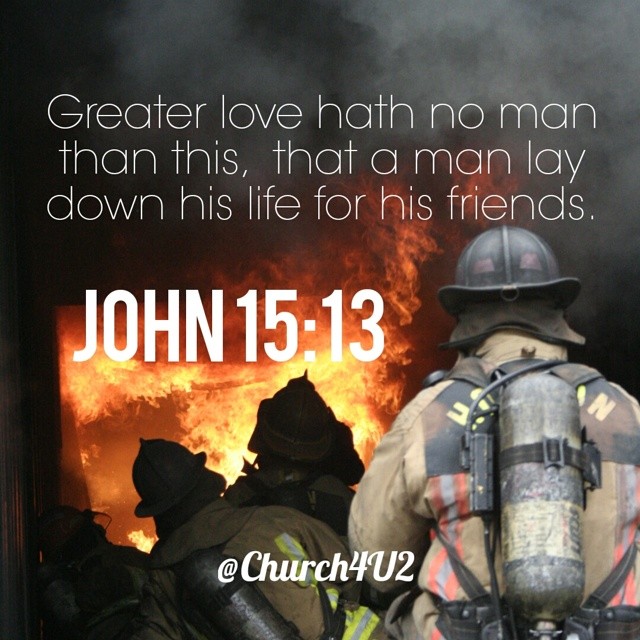
There was a time when a hero was one who sacrificed all for the good of others. Courage came in the form of laying down one’s life for a friend. Bravery meant facing death that others could live.
Our flimsy re-definition of heroism is but a symptom of deep-rooted issues. We’ve suppressed the truth of who we are and whose we are. We’ve forgotten why we’re here. If each would live according to our greater purpose and higher calling, how much of today’s suffering would dissipate? And how quickly.
Instead, we live ignorant and bored, ever in search of the latest diversion, however costly. And we read the headlines, shake our heads at the devastation and praise the man-made-woman all the while pointing our fingers at God in blame for the suffering.
If there is suffering, it’s not because God is silent and inactive. It’s because we are. And we’ve traded the greater good for the empty cistern of selfish gain.
 Die-hard fans braved threatening weather to witness the Blackhawks face-off for another championship. Even those who care nothing for hockey were converted to temporary fandom in time for the finals. Following the victory, multitudes swarmed the streets of Chicago for one glimpse of the winning team with their coveted cup. And I could only think of one thing.
There are young girls, even boys, being trafficked in celebration of one short-lived victory.
Ever since I found out that sporting events are among the largest magnets for human trafficking rings, I can’t glimpse a fragment of a game without mourning the countless victims waiting in the wings for the after-game festivities. How can we revel in the fantasy of athletic glory when so many are living a nightmare as a result? How can we root for any team if no one is rising to fight for the slaves suffering among us?
It’s beyond tragedy that we keep silent as an estimated 9.5 billion per year flows from our country into the torture of young innocents. As our sports heroes bathe in fame, fortune, and glory, our children are led as sheep to the slaughter. We invest millions in sports mania, blind to the billions squandered on the trafficking of our future. Will we continue to stand on the sidelines, watching in silence?
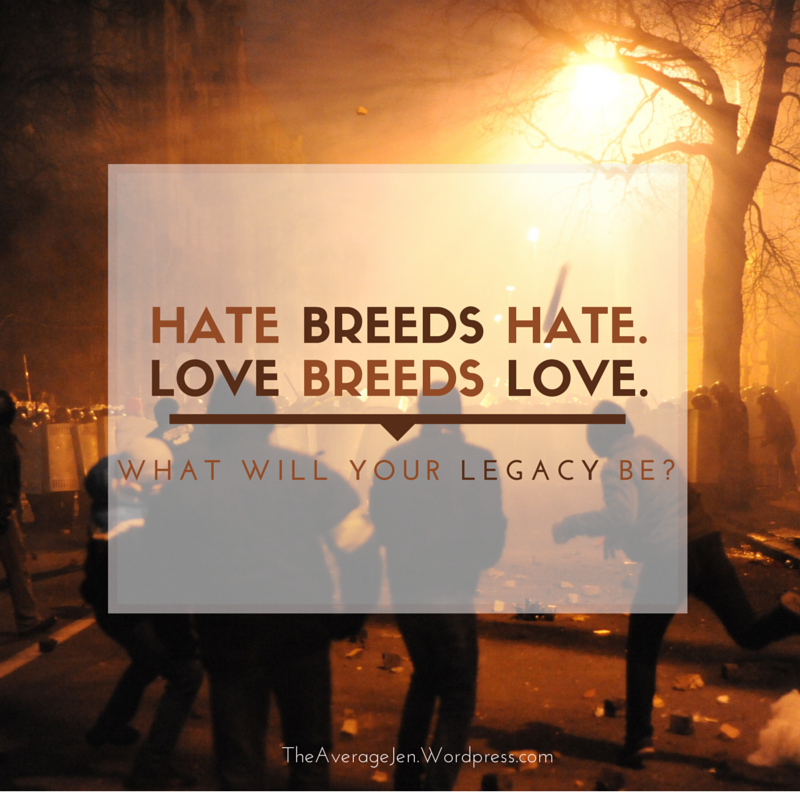
In light of current events, we need to consider what side we’re on…the side of love, or the side of hate. Either way, we’re leaving a legacy. What kind of legacy do you want to leave?
 A life in chains is unimaginable from the vantage point of freedom. Nothing could be more horrific than to be taken by force from the life, land, and family you love. Even more inconceivable is that anyone would willingly choose a life in chains.
When faced with opposition to their desired mission among the enslaved of their time, Johann Leonard Dober and David Nitschmann asserted their willingness to become slaves themselves. If reaching slaves meant a life in chains, they would choose such a life. Their declaration? “We shall become slaves among the slaves.” The men were eventually granted passage as free men, yet still they chose to live humbly in a land of slavery to proclaim the gospel of freedom to those in bondage.
As I consider their selflessness, I have to ask myself if I’d willingly do the same. Does my love for others run deep enough that I would sacrifice my comfort and security for their freedom? These men got on a boat and traveled far to fulfill their calling. But we don’t need to get on a boat to find people in need of help, hope, love, and freedom. And we don’t have to travel far to be selfless.
As Mother Teresa once said, “We think sometimes that poverty is only being hungry, naked and homeless. The poverty of being unwanted, unloved and uncared for is the greatest poverty. We must start in our own homes to remedy this kind of poverty.” There are people among us who live in chains. Modern slavery is rampant in our own country. The enslaved reside in our own cities. Still, beyond that, there are people who live as slaves to fear, abuse, addiction, neglect, and more. How can we sacrifice, here and now, for the enslaved in our midst?
While the sacrifice of the Moravian missionaries was heroic beyond measure, we can follow their example of selflessness to free those in bondage right here, right now. We don’t have to wear literal chains to be enslaved to a cause. Our daily, selfless sacrifice can do more for the cause of freedom than we can ever imagine.
“The Spirit of the Lord is upon me, for he has anointed me to bring Good News to the poor. He has sent me to proclaim that captives will be released, that the blind will see, that the oppressed will be set free, and that the time of the Lord’s favor has come.” (Luke 4:18-19)
True Love…is SELFLESS (Day 45, #50ShadesOfTrueLove)
 She was finally free, but she refused to forget those still in chains. While she could have lived in relative safety, she chose to risk her life to rescue those bound as she once was. Harriet Tubman knew the danger she would face in returning to the place of her own bondage for the sake of those enslaved. Yet she considered their lives and valued their freedom more highly than her own.
Had I lived the nightmare she lived, I wonder if I’d so willingly return. It would be so easy to slip into obscurity, to hide in the shelter of freedom—forgetting those who suffered I once had. The prospect of losing my newfound freedom might overshadow the potential freedom of others.
What would motivate a former slave to risk life and freedom for the sake of others? This woman who endured such unthinkable hardships came through the furnace of affliction with great faith. She once said, “Twant me, ’twas the Lord. I always told him, ‘I trust to you. I don’t know where to go or what to do, but I expect you to lead me,’ and He always did.”
The same God who led her is the God who had heard the cry of the slaves in the days of the Exodus, who upon seeing the oppression of a people in chains spoke these words: “I have indeed seen the misery of my people in Egypt. I have heard them crying out because of their slave drivers, and I am concerned about their suffering. So I have come down to rescue them…” (Exodus 3:7-8)
True love sees the needs of those in chains. And true love hears their cries. But it doesn’t stop there. True love is compassionate. And true love rescues.
Slavery is said to have been abolished years ago, but it continues today. Thousands are trafficked and sold across our own borders. We have a choice. Will we close our eyes to the need? Will we ignore the cry? Or will we see, hear, and act in compassion? Because only true love can set a captive free.
True Love…FREES (Day 38, #50ShadesOfTrueLove)
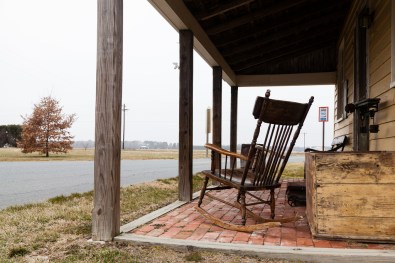
Photo Credit: Harriet Tubman Underground Railroad Byway | Bucktown Village… | Flickr
 An eighth-place finish at the Olympics is a dream few attain. And it’s no small exploit to survive 47 days stranded at sea. To endure two years of cruel treatment at a Japanese prison camp is unimaginable. Yet there’s something more remarkable about Louis Zamperini’s story than any of these feats combined.
The life of an Olympian-turned-war hero is a treasure for the history books, but Louis Zamperini accomplished something greater than these other impossibilities. It’s found in the words of a letter penned by his own hand, written to the man who’d tortured him during those years at prison camp…
“Under your discipline, my rights, not only as a prisoner of war but also as a human being, were stripped from me. It was a struggle to maintain enough dignity and hope to live until the war’s end…The post-war nightmares caused my life to crumble, but thanks to a confrontation with God through the evangelist Billy Graham, I committed my life to Christ. Love has replaced the hate I had for you. Christ said, ‘Forgive your enemies and pray for them’…I also forgave you and now would hope that you would also become a Christian.” –Louis Zamperini (Unbroken)
Reading these words, I’m humbled to consider the depth of suffering and staggered to contemplate the degree of forgiveness on the part of a man who suffered so greatly. This overcoming of unthinkable trials, this forgiving of unimaginable torture is the war hero’s greatest triumph.
It reminds me of Corrie ten Boom, who after saving the many lives during World War II was sent to prison camp—there tortured and starved, there losing her family. Years later, upon encountering one of the guards who’d dealt the blows of suffering—she forgave. Or of Elisabeth Elliot, who after her husband was speared to death, returned to the tribe responsible, living among them and teaching them the way of love.
Ultimately, it reminds me of Jesus who, beaten, tortured, suffering, and dying on the cross spoke words of forgiveness to his tormentors. If I am ever to forgive the unforgivable, love the unlovable, and overcome the impossible, I look to my Savior, who went before me in the way of suffering and forgiveness. And who enables me to do the same.
“But I say to you, love your enemies and bless the one who curses you, and do what is beautiful to the one who hates you, and pray over those who take you by force and persecute you.” (Matthew 5:44)
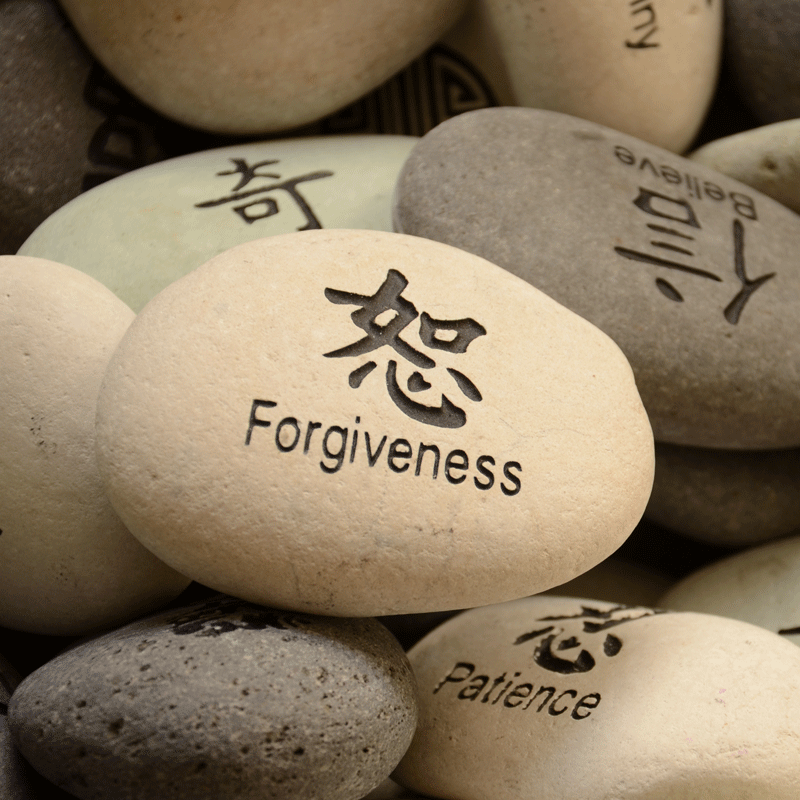
True Love…FORGIVES (Day 36,#50ShadesOfTrueLove)
Unbroken: A World War II Story of Survival, Resilience, and Redemption, by Laura Hillenbrand, Random House, 2010, pp. 396-97.
 This Life & Beyond
You must be logged in to post a comment.