Death

To Disappear

I live today in the constant awareness that my life is endangered by the mere fact that I am still breathing. All our lives are, in this daily war zone that is our world.

The places we work. The places we worship. The places we recreate. Nothing has been left untouched by the shadow of evil.

What do we do with this reality? How do we live each day knowing our lives could be taken in an instant?

The other day I was reading a Bible passage I’ve read many times before. It speaks of the final days, of how there will “great distress on the earth.” And it comes with a reminder: “But watch yourselves lest your hearts be weighed down with dissipation and drunkenness and cares of this life, and that day come upon you suddenly like a trap. For it will come upon all who dwell on the face of the whole earth.”

Amidst the horrific events we face in our modern age, it’s tempting to allow our hearts to become weighed down.

Drunkenness numbs. The cares of this life cause us to forget. But what exactly is dissipation?

It’s one of those words I thought I knew until I looked it up. As I initially thought, it does refer to indulgence in excessive pleasure. But beyond this, it also means “to squander or deplete.” On a scientific level, dissipation is “a physical process by which energy becomes not only unavailable but irrecoverable in any form.” To dissipate is to “cause something to disappear.” When something dissipates, it becomes “less than” it was originally intended to be.

If my time here is to be short, I don’t want to waste the moments allotted me. I don’t want to squander or deplete my resources. I don’t want to use my energy on things which are meaningless in the end. I don’t want to be any less than what I was originally intended to be.

I don’t want to disappear.

I’m not speaking of disappearing in a physical sense. I’m speaking of getting so lost in temporary pleasures and worldly cares that I lose sight of who I am and why I’m here. Of numbing myself so thoroughly that I forget the wisdom of numbering my days.

The current state of affairs awakens me. It causes me to reconsider the reason for my being here. It moves me to examine my path. How far have I drifted from the purpose for which I was created?

Father, as you have promised…use all that is intended for evil and bring forth good. If anything, use the horrific events of our day to awaken within us an awareness of the brevity of life. Turn our attention to things of eternal consequence. I pray we’d no longer dissipate our existence on what will waste away in the end. Instead, let us use the short time we have here on this earth to invest in things which will last forever.


Photo Credit: Wither – Free pictures on Pixabay
Life is More

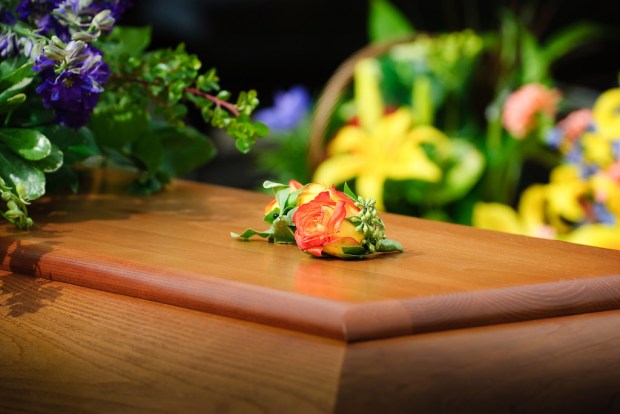
Roy's Funeral

We are more, so much more than flesh. And life is more, so much more than our temporary pursuits. When I stare at the skeletons in the neighborhood yards, I’m reminded again and again. I don’t want to live for short-lived gratification. I want my life to count for something that won’t rot in a casket with my bones.


Source: Skeletons

Photo Credit: Funeral | Casket | Don LaVange …www.flickr.com

Fleeting

blog_leavesonground

It’s easy to get sucked in to the monotonous routine of everyday life, forgetting how fleeting it all is. It’s tempting to invest time and resources on the needs and desires of my flesh, neglecting to consider it’s just a temporary house. How many hours have I spent worrying about how I look or how others perceive my external appearance, when this flesh is destined for the grave? There are far more important ways to invest my limited time.


Source: Skeletons

Photo Credit:Crossing over to Autumn Forest | Indy Kethdy | Flickr

Skeletons

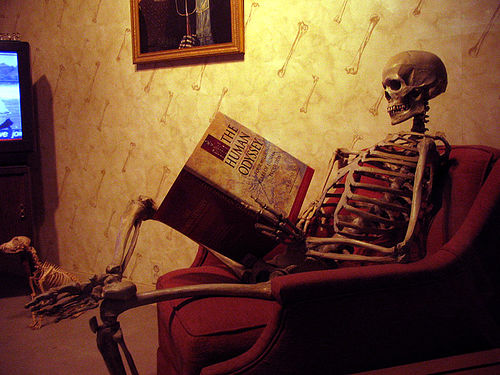
Blog_SkeletonSeen a lot of skeletons lately? I have. They seem to be everywhere these days—lying in garden beds, hanging from trees, lining the clearance aisles at the store. And while these skeletons are mere plastic replicas of the real thing, they serve as a reminder. Not just to buy tons of candy to pass out to costumed kids over the weekend. No, they are a reminder of something much more sobering.

Beneath our fashionable clothes and beyond our fading flesh, a mere skeleton holds us together. And when we’re gone, that skeleton is all that will be left of our bodies.

During a trip to a third world country, I walked through an impoverished graveyard where skeletons lined the pathways. My face-to-face encounter with those empty eye sockets and fleshless bones awakened me to the reality of my own mortality. I won’t be here long, no matter how slowly time seems to pass.

It’s easy to get sucked in to the monotonous routine of everyday life, forgetting how fleeting it all is. It’s tempting to invest time and resources on the needs and desires of my flesh, neglecting to consider it’s just a temporary house. How many hours have I spent worrying about how I look or how others perceive my external appearance, when this flesh is destined for the grave?

We are more, so much more. And life is more, so much more. When I stare at the skeletons in the neighborhood yards, I’m reminded again and again. I don’t want to live for short-lived gratification. I want my life to count for something that won’t rot in a casket with my bones.

“The grass withers, the flower fades, but the word of our God endures forever.” (Isaiah 40:8)

Source: Skeletons

Photo Credit: Skeleton Reading Book | Flickr – Photo Sharing! www.flickr.com

The Battles we Fight

We’re each granted our own share of battles that when we emerge victorious we might also battle on behalf of others.


Photo Credit:Free photo: Maple Leaf, Leaves, Red, Autumn – Free Image on …

Healing Wounds

Yes, by his wounds we are healed. But have we forgotten that we also are called to be like Christ? If he suffered, how are we to presume that we will live a life free of suffering? And if we are healed through his suffering, shall we not bring healing to others through our own suffering?


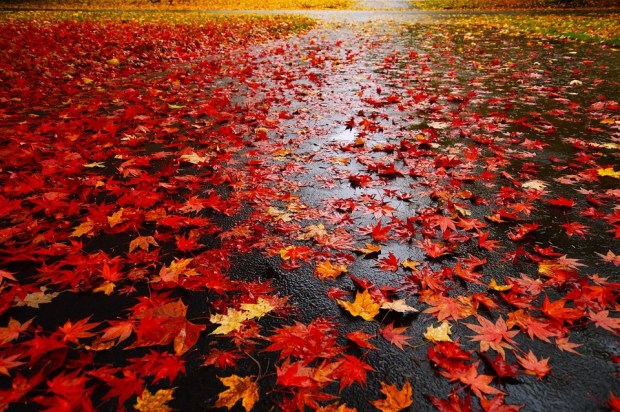
Photo Credit: Free photo: Red Leaves, Street, Hillside – Free Image on Pixabay …

The Purpose of Scars

My son is very proud of his scars. He loves to share the stories of how they came to be, giving play-by-play accounts of how he got that scrape on his knee or the bump on his elbow. In vivid detail, he’ll describe exactly where he was on the playground, what he was doing, and how he tripped and fell or whatever other catastrophe transpired. If we’re lucky, we might get a re-enactment of the event, minus a repeat injury.

As much as he loves elaborating upon stories of his own calamities, he equally enjoys sharing how his friends got their ouchies. It’s not that he revels in their pain, but that he empathizes. When a friend gets hurt, he understands. He’s been there.

At times, I’ve seen him put his arms around the shoulder of a crying friend, sharing one of his many stories of just why he can relate to their pain.

Imagine a world void of such compassion. It’s terrible enough to suffer. And yet, to suffer alone?

Some churches falsely teach that we’ll never suffer. “Christ suffered in our place, on the cross,” they reason. “And by his wounds we are healed. Therefore, we’ll never be wounded.”

Yes, by his wounds we are healed. But have we forgotten that we also are called to be like Christ?

If he suffered, how are we to presume that we will live a life free of suffering? And if we are healed through his suffering, shall we not bring healing to others through our own suffering?

I’m not saying that we can bring the supernatural, all-consuming healing that only our Savior can bring. But I believe that through our scars we bleed blood-red compassion that brings others to know the healing that is found in Christ.

I’ve found that those who adhere to the false prosperity gospel tend to be most impoverished of compassion, judging and condemning those who endure any amount of suffering.

But I’ve also found that those of us who bear scars love on deeper levels than those who have not endured the fires of affliction.

We’re each granted our own share of battles that when we emerge victorious we might also battle on behalf of others. Financial lack frees us to empathize with those in poverty. Barrenness enables us to understand loss. Physical pain helps us to relate to those enduring far worse.

Given the choice, the selfish part of me would choose a more comfortable path. But I know there are greater outcomes when I endure the furnace of affliction with grace, allowing God to birth in me a deeper compassion through the fire.


Photo Credit: Free photo: Leaves, Autumn, Colorful, Clamp – Free Image on …